Allosaurus
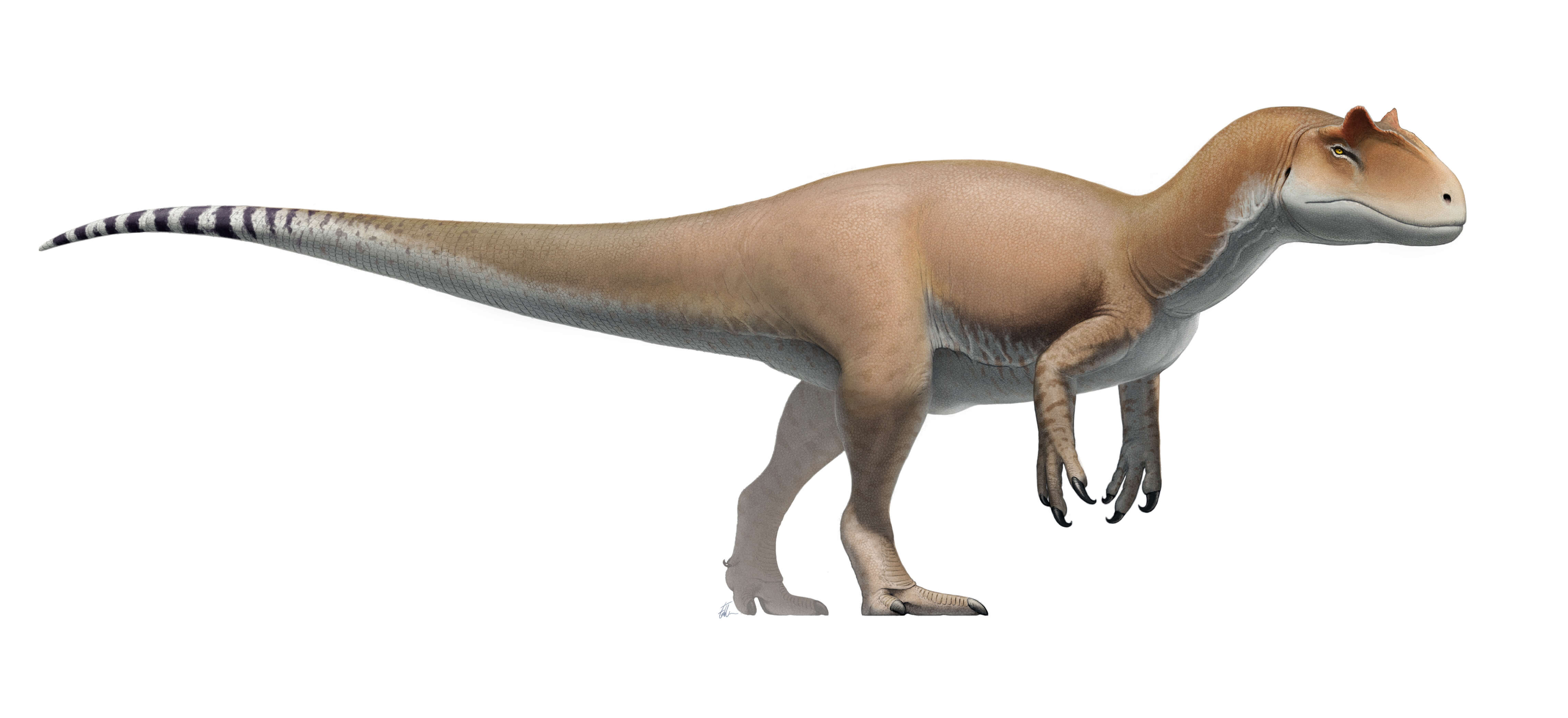
Allosaurus was a large, meat-eating theropod dinosaur that lived in North America and parts of Europe during the Late Jurassic Period, around 155 to 145 million years ago. It was a bipedal predator with a powerful tail for balance, sharp serrated teeth, and three-fingered hands tipped with claws. The most common and best-known species is Allosaurus fragilis, though several others have been identified, including A. jimmadseni, A. europaeus, and A. anax. Allosaurus was one of the top predators of its time, preying on or scavenging the remains of large plant-eating dinosaurs such as Stegosaurus and Diplodocus, and it may sometimes have clashed with others of its kind. Fossils from the famous Morrison Formation and other sites have made Allosaurus one of the best understood of all Jurassic carnivores.
Species and Classification

Scientists recognize several species of Allosaurus, though there is still debate over how many there really were and how different they looked. The best-known species, A. fragilis, comes from the Morrison Formation in North America, while A. jimmadseni was found in Utah and A. europaeus in Portugal. The main differences between them are in skull shape and the size or curve of the small horns above the eyes, though these features can also vary between individuals or with age. All of the species would have looked broadly similar in overall appearance, though the Portuguese form, A. europaeus, seems to have been somewhat smaller on average. A 2023 review confirmed A. fragilis as the main reference species, and most researchers now regard A. fragilis and A. jimmadseni as valid, while A. europaeus and other proposed names remain uncertain.
Appearance and Size

Allosaurus was a large dinosaur with a strong but relatively lightweight skull lined with dozens of sharp, serrated teeth. It had short, muscular arms ending in three-fingered hands with curved claws, and a long, powerful tail that helped it balance while moving or attacking. Adults of the best-known species, Allosaurus fragilis, averaged about 8.5 m in length, with the largest individuals reaching around 9.7 m. Body mass estimates vary, but most suggest an average adult weighed about 1.7 tonnes, with the biggest animals reaching between roughly 2.3 and 2.7 tonnes.
Skin impressions from Allosaurus are rare but show small, non-overlapping scales rather than feathers. These impressions come mainly from the neck, chest, and tail, and feature both fine pebbly scales a few millimetres wide and larger, plate-like ones up to about 2 cm across. No confirmed evidence of feathers or filament-like coverings has been found, but since some later theropods are known to have had simple feathers, it's possible that Allosaurus had limited or patchy feathering that has yet to be preserved.
Growth and Biology

Allosaurus seems to have grown fast, hitting its biggest growth spurt around the mid-teens and tapering off in its twenties. Young animals had proportionally longer lower legs and feet than adults, suggesting they were nimbler and chased smaller prey, whereas adults likely relied more on ambush and power. A few fossils hint at sex and body differences (for example, possible egg-laying bone tissue and subtle differences in thigh-bone shape), but these points are still debated. Many individuals show healed injuries - famously "Big Al," which had infections and multiple fractures - so Allosaurus could sometimes survive serious setbacks.
Feeding and Hunting

Evidence for how Allosaurus fed comes from many sources. Bite marks and injuries suggest it sometimes fought Stegosaurus, while shed teeth and scrape marks on sauropod bones show it also fed on large plant-eaters, either by hunting or scavenging. How it killed prey is still debated: some studies suggest it used a wide-opening jaw, strong neck muscles, and quick, slashing strikes, while others think it bit and tore in a more typical way. Its strong arms and curved claws probably helped it hold struggling prey, and its eyes likely provided a narrow but useful sense of depth. It could probably run in short bursts, fast enough to attack or chase prey briefly.
Social Behavior
Social behavior is the trickiest part to interpret. Large bone beds with many Allosaurus together have inspired "pack hunting" ideas, but there are alternative explanations: drought die-offs, predator traps, or repeated gathering at carcasses. Bite marks on Allosaurus bones - including possible cannibalism - and frequent healed injuries also fit competitive feeding scenarios seen in modern reptiles, where multiple animals converge on the same food and scuffles break out. In short, Allosaurus was almost certainly a dominant, opportunistic predator and scavenger, but whether it regularly cooperated to hunt remains unproven.
Habitat and Environment
Allosaurus is best known from the Morrison Formation of the western United States, a vast stretch of ancient floodplains that once covered parts of Colorado, Utah, and Wyoming about 150 million years ago. It has also been found in Portugal, where rocks of the same age preserve similar fossils and landscapes. During the Late Jurassic, this region was warm and mostly dry, with distinct wet and dry seasons. Rivers, lakes, and patches of forest cut through open plains of ferns and conifers, and long periods without rain may have caused droughts that brought many animals together around shrinking waterholes.
Allosaurus shared its world with a wide variety of life. Huge long-necked sauropods such as Diplodocus and Apatosaurus browsed among the trees, while armored and plated dinosaurs like Stegosaurus fed closer to the ground. Smaller plant-eaters, including early ornithopods, were likely among its more frequent prey. Other large carnivores such as Ceratosaurus and Torvosaurus also roamed the area, possibly favoring wetter lowlands and riverbanks. Alongside the dinosaurs lived crocodile-like reptiles, turtles, pterosaurs, small mammals, amphibians, and fish, forming a thriving Jurassic ecosystem in which Allosaurus stood near the top of the food chain.
References & Attributions
Image: Reconstruction of Allosaurus fragilis - Fred Wierum, CC BY-SA 4.0, via Wikimedia Commons
Image: Skulls of different Allosaurus species. Top-to-bottom: A. fragilis, A. jimmadseni, A. europeaus - Daniel J. Chure, Mark A. Loewen, CC BY 4.0, via Wikimedia Commons

Image: Size comparison of various Allosaurus specimens to a human. Click to enlarge. - Steveoc 86 Marmelad Scott Hartman, [5], Henrique Paes [6]., CC BY-SA 2.5, via Wikimedia Commons
![Steveoc 86 Marmelad Scott Hartman, [5], Henrique Paes [6].](https://commons.wikimedia.org/wiki/File%3AAllosaurus%20size%20comparison.svg)
Image: Allosaurus and Stegosaurus skeletons on display at the Denver Museum of Nature and Science - David Wipf, CC BY 2.0, via Wikimedia Commons

Image: Various Allosaurus skeletons at different growth stages - Daderot, CC0, via Wikimedia Commons
